

Early Detection of Breast Cancer in Young Women: New Digest Debunks 12 Myths That Can Delay Care
Breaking the Myths Science Series - BCYW Foundation
Know Whats Normal for You
Breaking the Myths Science Series
BCYW Foundation and YWBCRI connect science with timely breast health awareness, early detection, and action to prevent diagnostic delays.
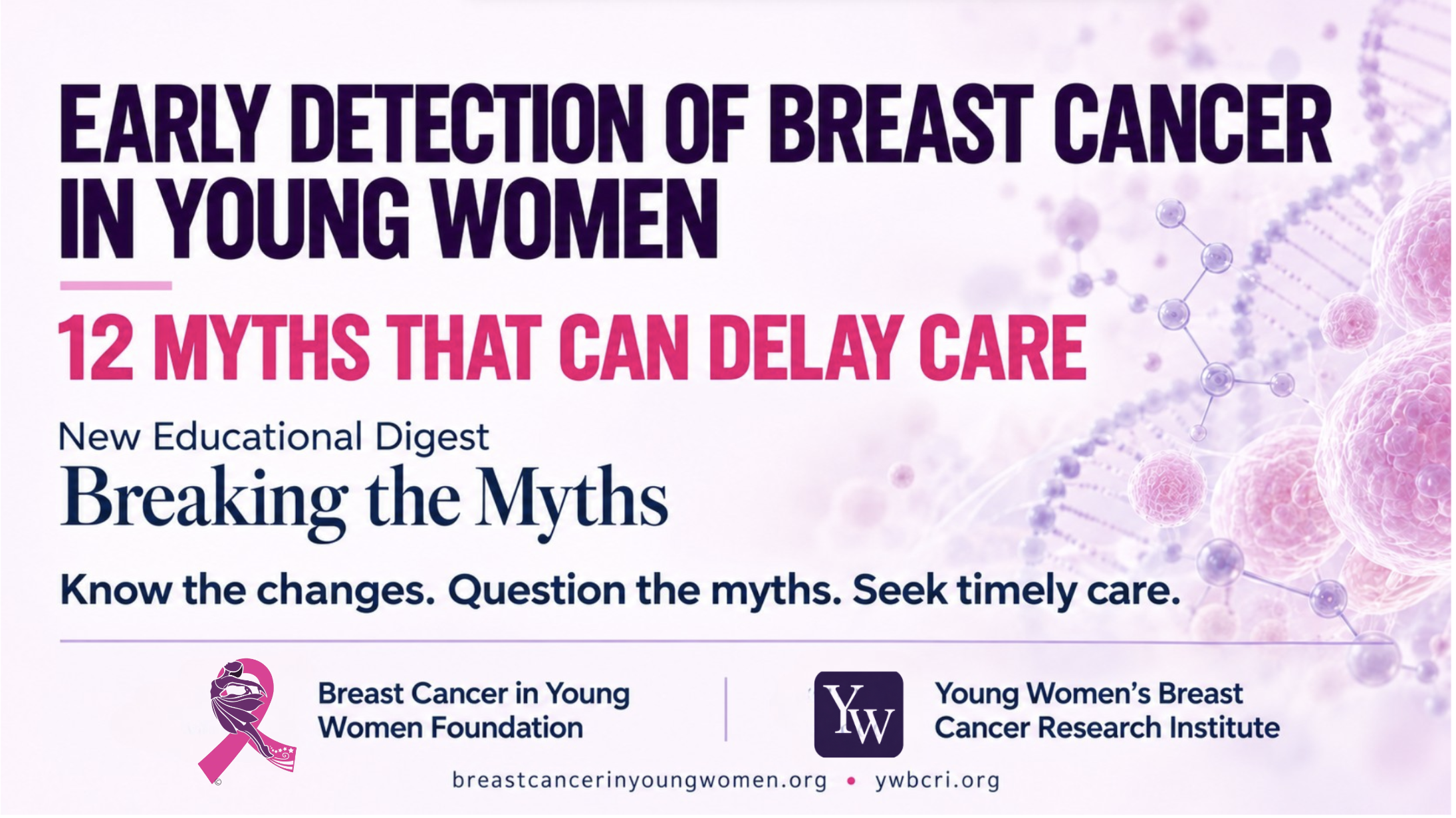
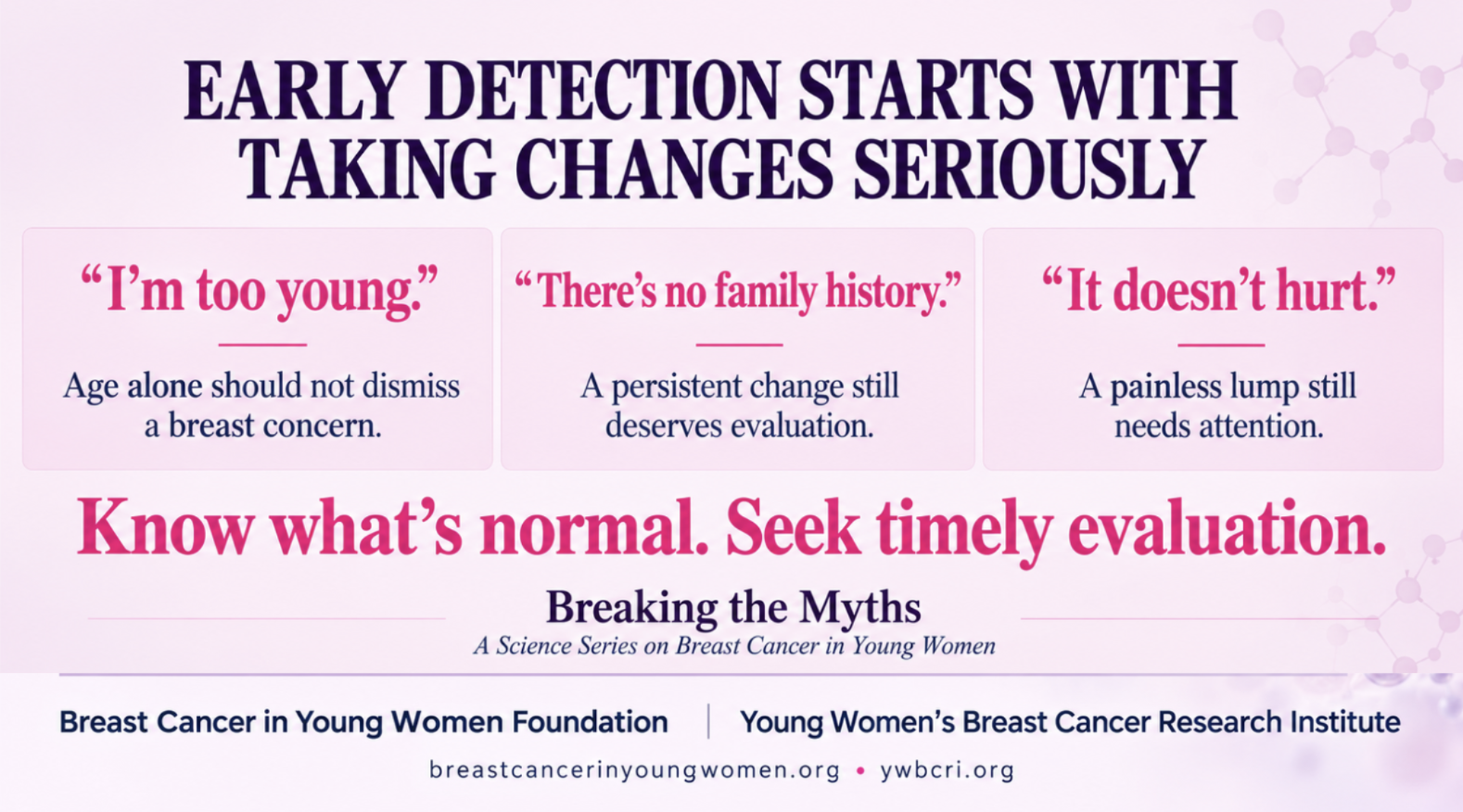
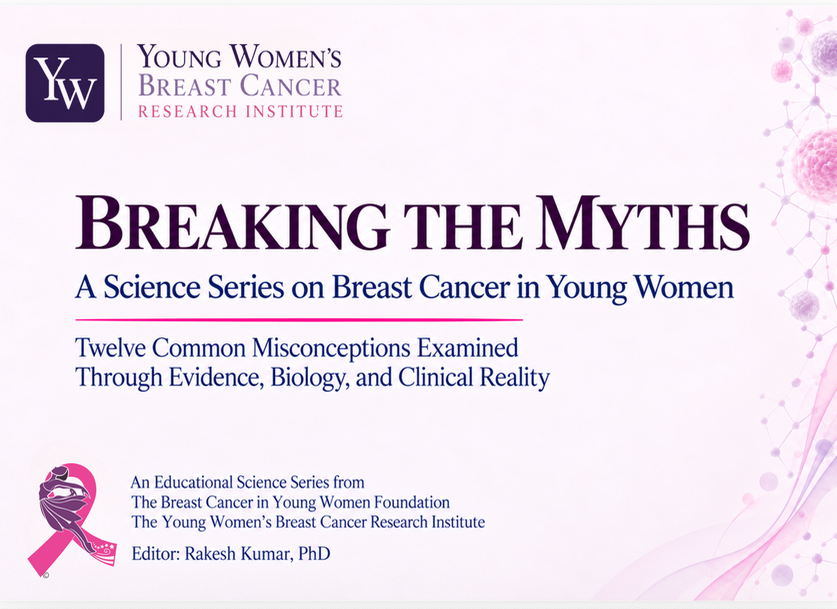
DENVER, CO, UNITED STATES, October 27, 2026 /EINPresswire.com/ -- Early detection can begin when a young woman recognizes a change—and when she takes that concern seriously. The Breast Cancer in Young Women Foundation (BCYW Foundation) and the Young Women’s Breast Cancer Research Institute (YWBCRI) are releasing Breaking the Myths: A Science Series on Breast Cancer in Young Women, an educational resource that examines twelve misconceptions that can affect when women seek care, how symptoms are assessed, and how treatment decisions are made.“You’re too young.” “There is no family history.” “It doesn’t hurt.” These statements may seem reassuring, but assumptions can delay diagnosis when they replace a medical assessment. The book bridges that gap by connecting accessible science with practical questions young women can ask during a medical consultation.
This collection brings together twelve in-depth articles by leading medical and subject-matter experts. First published on LinkedIn Pulse, the articles examine common beliefs through the lenses of evidence, biology, and clinical reality. Each article features a clear key point, an organized discussion, supporting references, and a link to the original illustrated article.
EARLY AWARENESS: A PATHWAY TO TIMELY EVALUATION?
The digest draws an important distinction between routine screening and symptom evaluation: they serve different purposes. Being younger than the recommended screening age shouldn’t prevent a woman from seeking assessment of a new, persistent, growing, or otherwise unusual breast change. It also emphasizes that checking for a lump isn’t enough. Changes in the skin, nipples, breast size, or underarm lymph nodes may also be significant. A symptom’s pattern, persistence, and progression may be more informative than whether it fits a familiar expectation.
Most breast changes in young women are benign. The collection emphasizes that reassurance should follow an appropriate assessment and include a clear follow-up plan.
“Early detection depends not only on recognizing a symptom but also on what happens after a young woman voices a concern,” said Rakesh Kumar, PhD, Founder and President of BCYWF and Scientific Director of YWBCRI. “We want this educational resource to help young women take action sooner and with confidence—and to help clinicians, families, and healthcare systems recognize when reassurance should prompt further evaluation.”
12 COMMON MYTHS ABOUT THE BREAST CANCER JOURNEY
The collection begins with assumptions about age, family history, and pain, then explores cyst-like lumps, diagnostic dismissal, and changes during pregnancy and breastfeeding. It also covers inflammatory breast cancer, breast density, imaging, age-related biological differences, endocrine therapy, and risk-reducing mastectomy.
Across these topics, the authors explain that no single characteristic can answer every clinical question. Breastfeeding does not automatically explain a persistent abnormality. Reassuring imaging must be considered alongside clinical findings. Age alone does not define tumor biology or determine the most appropriate treatment.
The book also addresses reproductive priorities, ovarian function, quality of life, and long-term survivorship. Its scope links earlier recognition to the individualized decisions that follow diagnosis.
PRACTICAL GUIDANCE
A summary section, “The 12 Myths at a Glance,” offers readers a quick overview before the detailed articles. Two final sections synthesize the lessons: “What the 12 Myths Collectively Reveal” and “From Awareness to Action: Breast Self-Care and Timely Diagnosis.”
Readers are encouraged to know what their breasts usually look and feel like, describe when a change began, and ask what might be causing it. They can also ask whether imaging or further tests are appropriate, what improvement to expect, and when to return for reassessment.
The digest encourages readers to connect with trusted family members, peers, patient advocates, and reliable educational resources. Practical support can help women navigate uncertainty, appointments, referrals, and access barriers.
However, preventing delays cannot rely on self-advocacy alone. Clinicians and healthcare systems also share responsibility: they must listen carefully, avoid dismissing concerns based on age, conduct appropriate investigations, and follow up on unresolved concerns.
LINKING EDUCATION TO THE MISSION OF EARLY ACTION
The release advances BCYW Foundation’s work across awareness, education, advocacy, early detection, research, and survivorship. It also aligns with YWBCRI’s focus on understanding the earliest biological changes linked to breast cancer development.
The organizations aim to foster informed conversations among young women, adolescents, families, clinicians, educators, and advocates. The book’s central message is simple: awareness is the beginning; evidence gives it direction.
Breaking the Myths is for educational purposes and complements individualized medical advice and clinical care. Readers should consult a doctor or a qualified healthcare professional about symptoms, concerns, or healthcare decisions.
ACCESS THE EVIDENCE DIGEST
The digital book is available without charge through the websites of both organizations:
Young Women’s Breast Cancer Research Institute
https://ywbcri.org
Direct book link: https://breastcancerinyoungwomen.org/docs/evidence-education-library/breaking-myths-breast-cancer-young-women.pdf
Breast Cancer in Young Women: Resources, Evidence and Education Library
https://breastcancerinyoungwomen.org/resources/
ABOUT
The Breast Cancer in Young Women Foundation is a United States–based nonprofit organization dedicated to saving young women's lives through targeted awareness, education, advocacy, early detection, and scientific research. It brings together clinicians, scientists, nurses, survivors, advocates, NGOs, and partners from 35 countries. It advances targeted awareness and research and highlights emerging advances in BCYW through its peer-reviewed, open-access journal, Young Women's Breast Cancer and Health (YWBC). One of the foundation's programs, the Youth Council for Breast Health (YCBH), promotes targeted awareness on educational campuses. Through evidence-based analysis, the Foundation works to improve outcomes and long-term survivorship for young women diagnosed with breast cancer.
The Young Women's Breast Cancer Research Institute (YWBCRI), a research initiative of the BYW Foundation, advances collaborative research on the earliest biological changes that precede breast cancer. It focuses on early breast biology, metabolic drivers, and opportunities to predict risk, prevent disease, and enable early intervention. The Institute aims to connect discoveries about how disease begins with approaches that could help identify and intercept risk earlier.
DISCLAIMER: Featured studies and their accompanying highlights and infographics summarize key findings. For complete study data, methodology, and interpretation, readers should consult the cited original publications. This information is provided for educational purposes only and does not substitute for the need for professional medical advice and consulting a doctor with your concerns and doubts.
Rakesh Kumar, Ph.D., Founder and President
Breast Cancer in Young Women Foundation
rakeshkumar@ywbcri.org
Visit us on social media:
LinkedIn
Bluesky
Instagram
Facebook
YouTube
Legal Disclaimer:
EIN Presswire provides this news content "as is" without warranty of any kind. We do not accept any responsibility or liability for the accuracy, content, images, videos, licenses, completeness, legality, or reliability of the information contained in this article. If you have any complaints or copyright issues related to this article, kindly contact the author above.
