

Dr. Mohana Rao Paitbandla Explains Why Modern Private Neurosurgeons Must Become System Builders at NSIPPFCON 2026
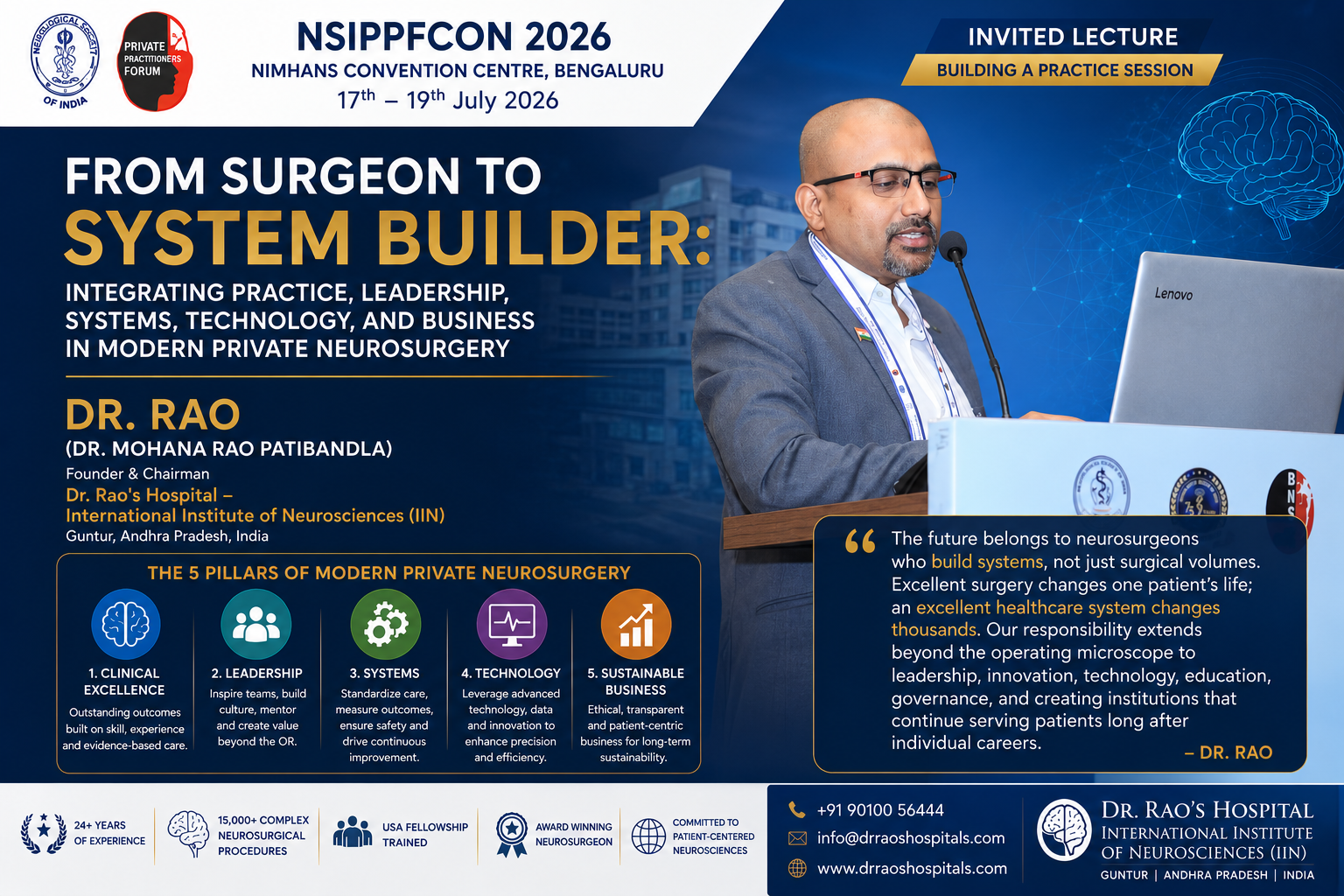
Dr. Mohana Rao Patibandla (Dr. Rao), Founder & Chairman of Dr. Rao's Hospital – International Institute of Neurosciences (IIN), delivers his invited lecture, "From Surgeon to System Builder: Integrating Practice, Leadership, Systems, Technology, and Busin
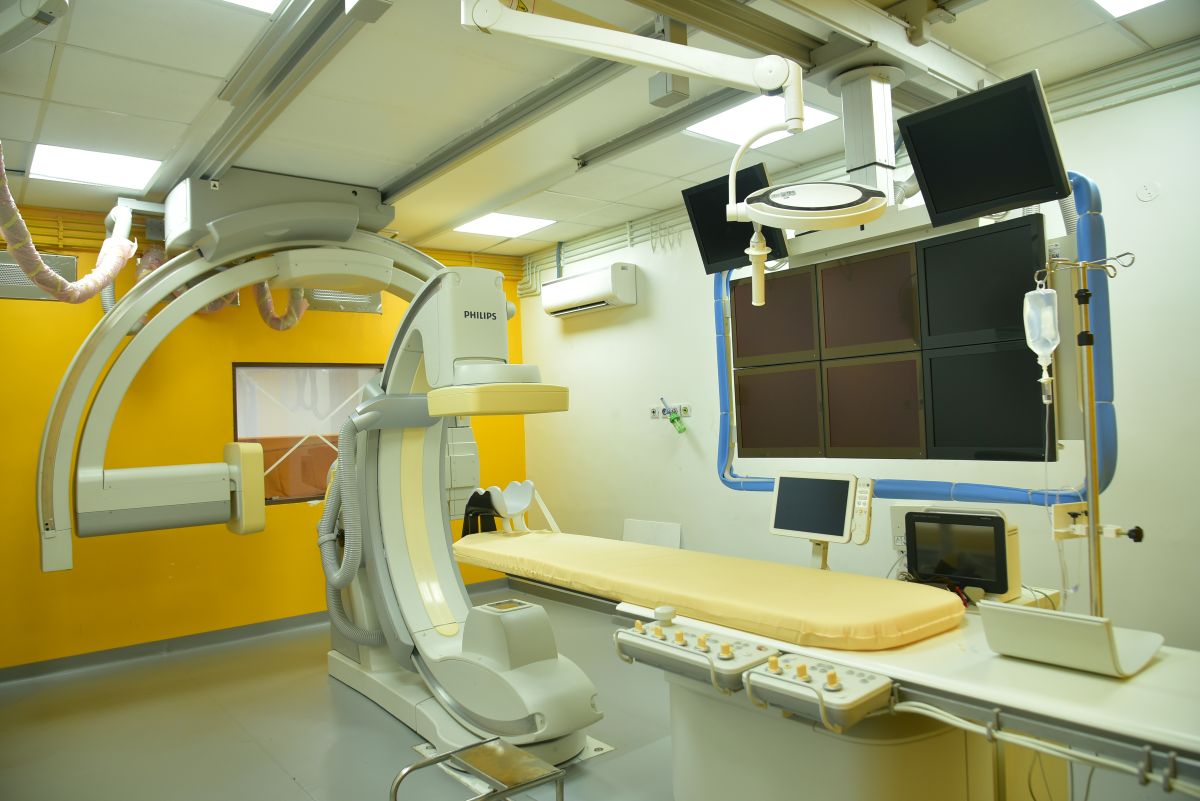
The advanced biplane cath lab at Dr. Rao's Hospital, designed for precision neurovascular procedures and minimally invasive surgeries, first in Andhra Pradesh and Telangana in India.
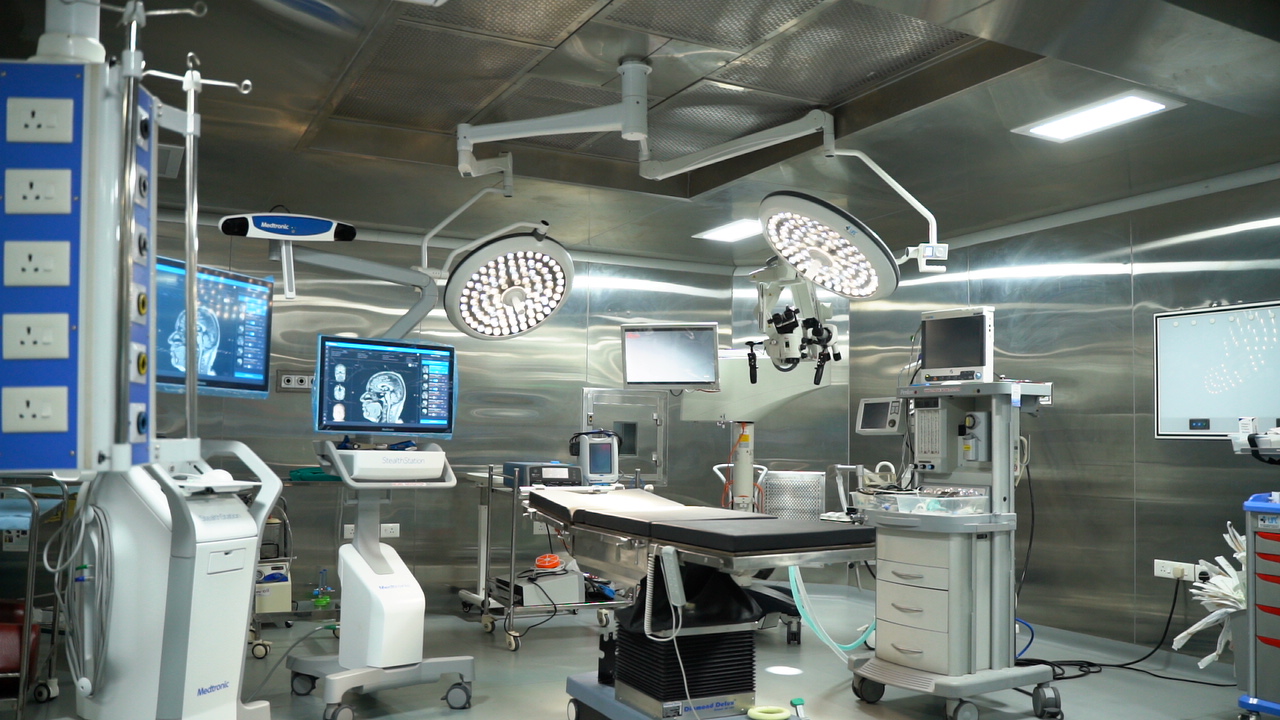
The high-tech neurosurgery operating room at Dr. Rao's Hospital, Guntur featuring advanced imaging and navigation systems for precise brain and spine surgeries.
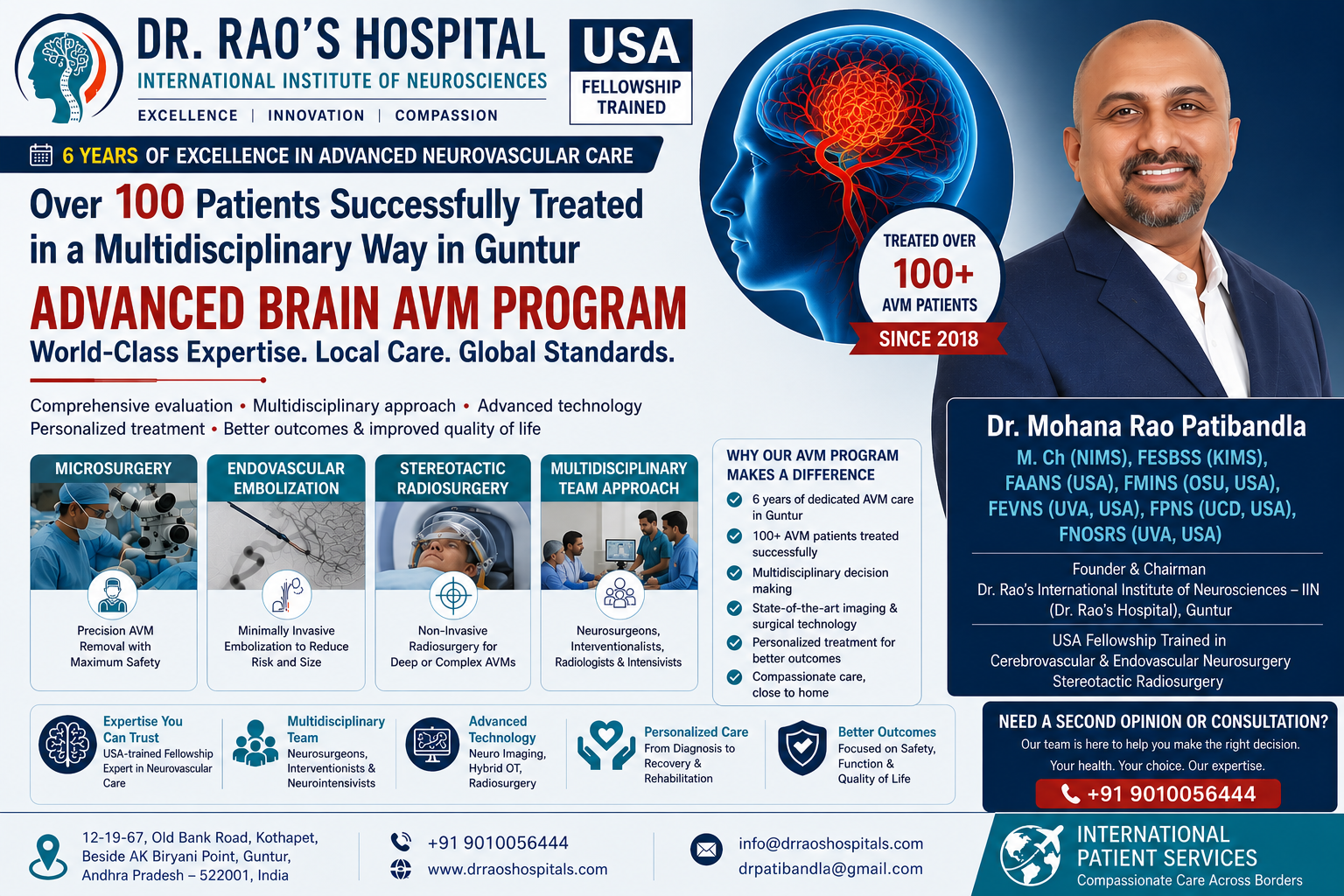
Over 100 patients with brain arteriovenous malformations (AVMs) have been treated through a personalized multidisciplinary approach at Dr. Rao's Hospital – International Institute of Neurosciences, where USA-trained neurosurgeon Dr. Rao integrates microsu
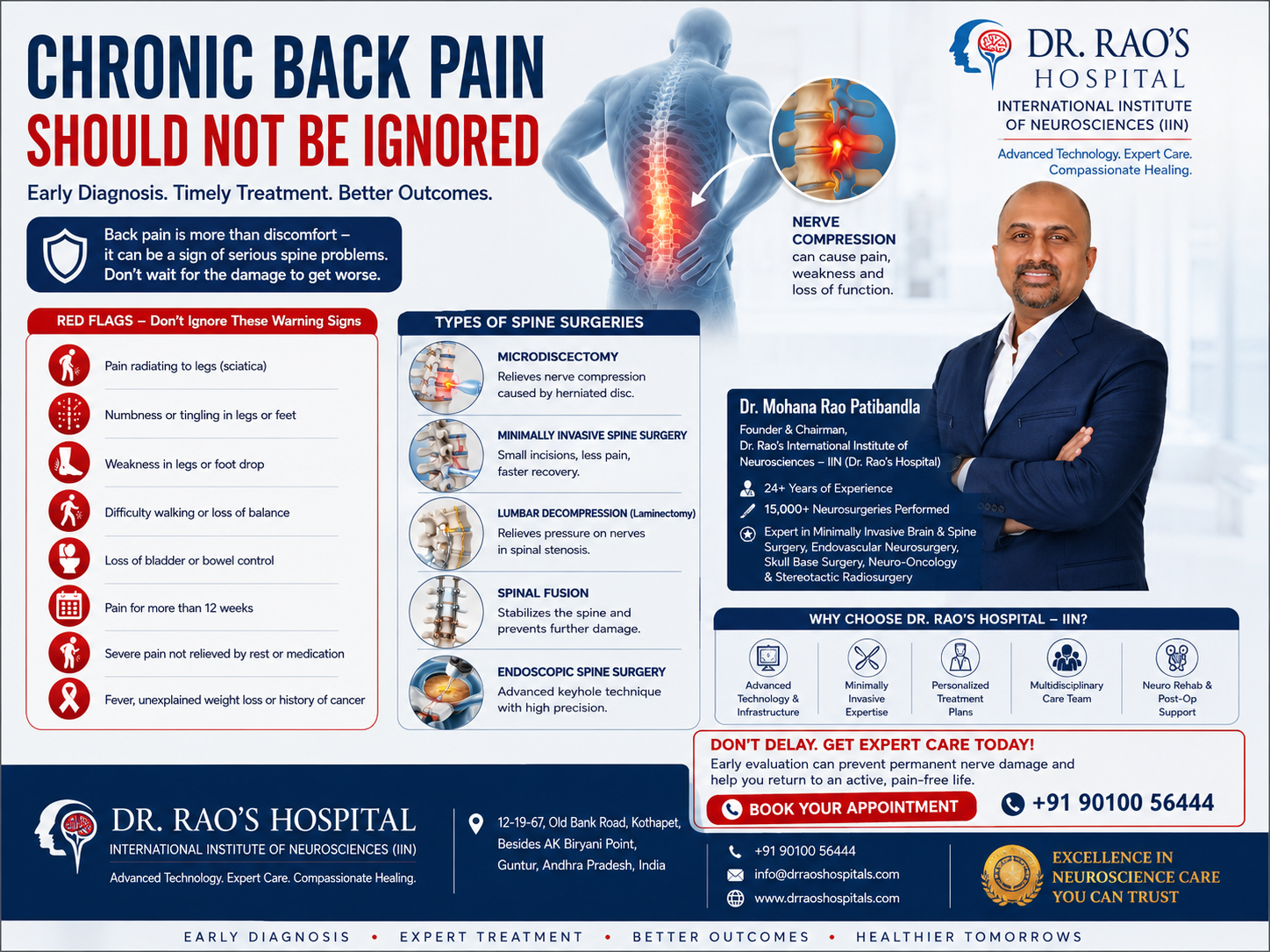
Dr. Mohana Rao Patibandla explains the warning signs of chronic back pain, symptoms of nerve compression, and modern spine surgery options. Early diagnosis and personalized treatment at Dr. Rao's Hospital – International Institute of Neurosciences (IIN) c
Dr. Rao explains how leadership, systems, technology, ethics, and innovation are transforming modern private neurosurgery beyond the operating room.
Dr. Rao Advocates Integrating Clinical Excellence, Leadership, Systems Thinking, Technology, and Ethical Business to Build Sustainable Neurosurgical Centers
The future of private neurosurgery extends far beyond the operating room. It requires neurosurgeons to become leaders, innovators, educators, system architects, and institution builders. This was the central message delivered by Dr. Mohana Rao Patibandla (Dr. Rao), internationally fellowship-trained neurosurgeon and Founder & Chairman of Dr. Rao's Hospital – International Institute of Neurosciences (IIN), during his invited lecture, "From Surgeon to System Builder: Integrating Practice, Leadership, Systems, Technology, and Business in Modern Private Neurosurgery," at NSIPPFCON 2026, held at the NIMHANS Convention Centre, Bengaluru. The lecture was presented as part of the conference's Building a Practice session.
Organized by the Neurological Society of India (NSI) and its Private Practitioners Forum, NSIPPFCON 2026 brought together leading neurosurgeons, neurologists, healthcare administrators, policymakers, and industry experts to discuss the future of neurological care, leadership, patient safety, innovation, and sustainable healthcare delivery.
Beyond Surgery: Building Institutions That Outlast Individuals
Modern neurosurgery has entered a transformative era. While technical excellence remains fundamental, long-term success increasingly depends on creating systems that consistently deliver safe, high-quality, patient-centered care.
According to Dr. Rao, today's neurosurgeon must evolve from being solely an exceptional surgeon to becoming a system builder—someone capable of integrating clinical excellence with leadership, organizational development, technology, quality improvement, and ethical healthcare management.
"Great surgeons save lives. Great systems save generations of lives. The future of neurosurgery belongs to those who can build institutions where excellence becomes a process, not an exception."
The Five Pillars of Modern Private Neurosurgery
During his lecture, Dr. Rao outlined five essential pillars that define successful neurosurgical practice in the twenty-first century.
1. Clinical Excellence Remains the Foundation
Every successful neurosurgical center begins with uncompromising commitment to patient care.
Modern neurosurgeons must continuously refine expertise in:
Brain tumor surgery
Skull base surgery
Minimally invasive neurosurgery
Spine surgery
Cerebrovascular surgery
Endovascular neurosurgery
Pediatric neurosurgery
Functional neurosurgery
Neuro-oncology
Neurocritical care
Clinical outcomes remain the most important measure of success.
2. Leadership Beyond the Operating Room
Leadership today extends far beyond performing complex operations.
Dr. Rao emphasized that neurosurgeons must inspire multidisciplinary teams, mentor younger surgeons, establish institutional culture, promote continuous education, and foster environments where patient safety is everyone's responsibility.
Healthcare leadership requires emotional intelligence, communication, accountability, and the ability to unite diverse professionals around a shared vision of excellence.
3. Systems Drive Consistency
Exceptional patient outcomes are rarely the result of individual effort alone.
Instead, they emerge from well-designed systems that support every stage of patient care.
Examples include:
Standardized clinical pathways
Surgical safety checklists
Infection prevention protocols
Morbidity and mortality reviews
Digital documentation
Quality assurance programs
Multidisciplinary tumor boards
Stroke pathways
ICU protocols
Continuous performance improvement
According to Dr. Rao, systems reduce variability, improve efficiency, and enhance patient safety.
4. Technology as a Force Multiplier
Technology has fundamentally changed modern neurosurgery.
Advanced tools such as:
Neuronavigation
Hybrid operating rooms
Intraoperative neurophysiological monitoring
High-definition operative microscopy
Neuroendoscopy
Artificial intelligence
Electronic medical records
Digital imaging
Data analytics
Telemedicine
allow surgeons to make more informed decisions while improving precision, safety, and efficiency.
Dr. Rao stressed that technology should enhance—not replace—clinical judgment and compassionate patient care.
5. Ethical Business Sustains Healthcare
Private healthcare must remain financially sustainable while preserving trust and ethics.
Dr. Rao highlighted that responsible practice includes:
Transparent communication
Ethical decision-making
Cost-effective care
Operational excellence
Staff development
Patient education
Digital engagement
Governance
Long-term planning
Continuous innovation
Building sustainable healthcare organizations ultimately enables broader access to advanced neurosurgical care.
Tier-II Cities Are Transforming Indian Neurosurgery
Dr. Rao observed that advanced neurosurgical care is increasingly expanding beyond metropolitan centers.
With appropriate investment in technology, skilled teams, standardized systems, and continuous education, comprehensive neurosciences centers in Tier-II cities can deliver world-class care closer to patients' homes.
This model reduces delays in treatment, improves accessibility, and strengthens regional healthcare infrastructure.
Patient-Centered Systems Improve Outcomes
Throughout his presentation, Dr. Rao emphasized that every decision—whether clinical, administrative, or technological—should ultimately improve the patient experience.
Institutional success is measured not only by surgical volumes but also by:
Patient safety
Clinical outcomes
Quality indicators
Accessibility
Affordability
Innovation
Education
Trust
Modern neurosurgery must integrate all these dimensions into a unified healthcare ecosystem.
Leadership for the Next Generation
Dr. Rao encouraged young neurosurgeons to think beyond individual careers.
Building sustainable institutions requires:
Lifelong learning
Mentorship
Innovation
Strategic planning
Collaborative leadership
Digital transformation
Commitment to excellence
The goal is not merely to establish a successful practice but to create organizations that continue delivering outstanding patient care for decades.
"The future belongs to neurosurgeons who build systems, not just surgical volumes. Excellent surgery changes one patient's life; an excellent healthcare system changes thousands. Our responsibility extends beyond the operating microscope to leadership, innovation, technology, governance, and creating institutions that continue serving patients long after individual careers."
— Dr. Rao
About Dr. Mohana Rao Patibandla
Dr. Mohana Rao Patibandla is a USA fellowship-trained neurosurgeon and Founder & Chairman of Dr. Rao's Hospital – International Institute of Neurosciences (IIN) in Guntur, Andhra Pradesh. Following his formal introduction, he is professionally referred to as Dr. Rao. His areas of expertise include minimally invasive brain and spine surgery, skull base surgery, cerebrovascular and endovascular neurosurgery, pediatric neurosurgery, neuro-oncology, functional neurosurgery, stereotactic radiosurgery, and healthcare systems development. Dr. Rao is committed to advancing patient-centered neuroscience through innovation, leadership, education, and technology.
About Dr. Rao's Hospital – International Institute of Neurosciences (IIN)
Dr. Rao's Hospital – International Institute of Neurosciences (IIN) is a dedicated quaternary neurosciences center in Guntur, Andhra Pradesh, India, providing comprehensive care in neurology, neurosurgery, spine surgery, cerebrovascular surgery, neuro-oncology, pediatric neurosurgery, endovascular neurosurgery, epilepsy surgery, stereotactic radiosurgery, neurocritical care, and rehabilitation. The institute combines advanced technology with evidence-based medicine and multidisciplinary collaboration to deliver high-quality, patient-centered neuroscience care.
Media Contact
Dr. Rao's Hospital – International Institute of Neurosciences (IIN)
12-19-67, Old Bank Road, Kothapet, Guntur – 522001, Andhra Pradesh, India
📞 +91 90100 56444
📧 info@drraoshospitals.com
📧 drpatibandla@gmail.com
🌐 https://drraoshospitals.com
Keywords
Modern Private Neurosurgery, Neurosurgery Leadership, Healthcare Leadership, Neurosurgery Systems, System Builder in Healthcare, Neurosurgery Practice Management, Private Neurosurgical Practice, Neurosurgery Innovation, Hospital Leadership, Healthcare Systems, Neurosurgery Technology, Digital Neurosurgery, Patient-Centered Neurosurgery, Neurosurgery Quality Improvement, Neurosurgery Governance, Ethical Healthcare Management, Building a Neurosurgery Center, Neurosurgeon Entrepreneur, Best Neurosurgeon in India, Best Neurosurgeon in Guntur, Dr. Rao's Hospital – International Institute of Neurosciences, NSIPPFCON 2026, Neurological Society of India, Sustainable Healthcare Systems.
Mohana Rao Patibandla
Patibandla Narayana Swamy Neurosciences LLP
+ +91 90100 56444
info@drraoshospitals.com
Visit us on social media:
LinkedIn
Instagram
Facebook
YouTube
X
Dr. Rao's Hosptial - Best Neurology hospital in Guntur
Legal Disclaimer:
EIN Presswire provides this news content "as is" without warranty of any kind. We do not accept any responsibility or liability for the accuracy, content, images, videos, licenses, completeness, legality, or reliability of the information contained in this article. If you have any complaints or copyright issues related to this article, kindly contact the author above.
