

Edible Insects Market Growth Accelerates as Industry Advances from US$ 1.18 Billion in 2025 to USD 4.63 Billion by 2035
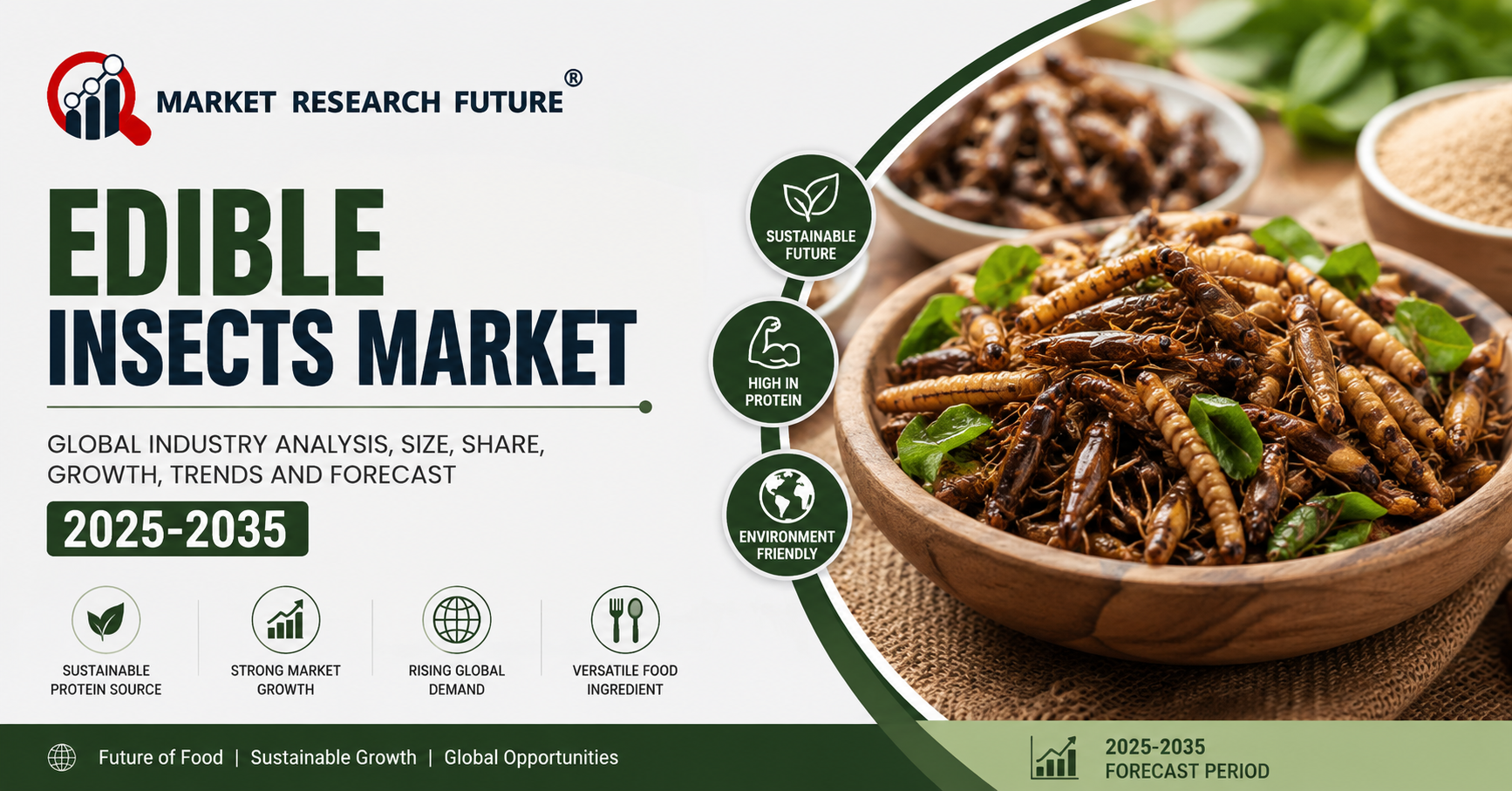
Edible Insects Market
According to Market Research Future, the global Edible Insects Market was valued at approximately USD 1.18 billion in 2025 and is projected to grow from USD 1.36 billion in 2026 to USD 4.63 billion by 2035, registering a CAGR of 15.2% during the forecast period. The market’s growth trajectory reflects increasing regulatory acceptance, technological advancements in insect farming, and growing consumer awareness regarding high-protein, nutrient-rich food alternatives.
Growing Interest in Sustainable Protein Sources Reshaping the Industry:
The edible insects industry has evolved from a niche sector into an emerging pillar of the alternative protein ecosystem. Insects offer significant environmental advantages over traditional livestock production, requiring substantially less land, water, and feed while generating lower greenhouse gas emissions. These sustainability benefits are becoming increasingly important as governments, corporations, and consumers seek solutions that support climate goals and resource conservation.
Advancements in automated farming systems, controlled-environment production technologies, and vertical insect-rearing facilities are improving operational efficiency and scalability. Commercial producers are increasingly leveraging precision farming techniques to ensure consistent quality and optimize production output.
Furthermore, growing investment activity across the alternative protein sector is supporting innovation in insect-based ingredients, including protein powders, snacks, nutritional supplements, animal feed formulations, and functional food products. As awareness grows, edible insects are gradually moving from specialty markets toward mainstream commercial adoption.
Latest Trends Influencing the Edible Insects Market:
1. Expansion of Cricket-Based Food Products
Crickets remain among the most commercially successful edible insect categories. Their high protein content, favorable amino acid profile, and relatively mild taste make them suitable for protein powders, baked goods, snack bars, and sports nutrition products. Food manufacturers continue to introduce innovative formulations that improve consumer acceptance and broaden product accessibility.
2. Technological Innovation in Insect Farming
Automation, robotics, AI-assisted monitoring systems, and climate-controlled production facilities are improving efficiency throughout the insect farming value chain. These technologies help reduce production costs while ensuring standardized quality and traceability.
3. Growing Acceptance of Alternative Proteins
Consumer attitudes toward alternative proteins continue to evolve. Younger demographics, environmentally conscious consumers, and fitness-focused individuals are increasingly exploring sustainable protein options. Research also indicates that consumer exposure and education can significantly improve willingness to try insect-based foods.
4. Increased Focus on Animal Feed Applications
Beyond human consumption, insect proteins are gaining popularity in aquaculture, poultry feed, and pet nutrition. The ability of insects to convert organic materials into high-value protein creates an attractive solution for feed manufacturers seeking sustainable ingredient alternatives.
5. Regulatory Progress Supporting Commercialization
Government agencies and food safety authorities across several regions are establishing frameworks that support commercialization of insect-derived ingredients. Regulatory approvals continue to encourage market expansion and product innovation.
Request Sample PDF Copy: https://www.marketresearchfuture.com/sample_request/4902
Key Market Drivers:
1. Rising Demand for Sustainable Food Systems
Global food production faces mounting pressure from population growth, urbanization, and climate-related challenges. Edible insects provide an efficient source of nutrition that requires fewer natural resources compared to traditional livestock production.
2. Superior Nutritional Profile
Edible insects contain high levels of protein, essential amino acids, healthy fats, vitamins, and minerals. Their nutritional value makes them attractive for functional foods, sports nutrition products, dietary supplements, and specialized health-focused formulations.
3. Growing Environmental Awareness
Consumers are increasingly evaluating the environmental impact of their dietary choices. Insect farming aligns with sustainability objectives by reducing land usage, water consumption, and greenhouse gas emissions relative to conventional animal agriculture.
4. Expanding Alternative Protein Industry
The rapid growth of the alternative protein sector is creating favorable conditions for edible insect products. Food manufacturers are diversifying protein sources to meet changing consumer preferences and reduce dependence on traditional livestock-based ingredients.
5. Investment and Commercial Scale Production
Significant capital investments are supporting the development of large-scale insect farming operations worldwide. Commercial producers are expanding capacity to address growing demand from food and feed industries.
Emerging Opportunities Across the Value Chain:
The edible insects market presents numerous opportunities for stakeholders across production, processing, and commercialization stages.
One major opportunity lies in incorporating insect proteins into mainstream packaged foods. Protein-enriched snacks, bakery products, meal replacements, and nutritional beverages represent promising growth segments. Companies that successfully improve taste, texture, and consumer familiarity may gain competitive advantages.
The pharmaceutical and cosmetics sectors also offer substantial growth potential. Bioactive compounds derived from insects are attracting interest for use in nutraceuticals, skincare products, and wellness applications.
Additionally, emerging economies present favorable opportunities due to existing traditions of insect consumption and growing awareness of sustainable food practices. Strategic partnerships between insect producers, food manufacturers, and research institutions are expected to accelerate market development over the coming years.
Segment Analysis:
1. By Insect Type
Crickets represent one of the most commercially developed insect categories. Their nutritional profile, scalability, and consumer acceptance support widespread adoption across food and supplement applications.
Mealworms are increasingly utilized in protein powders, snacks, and feed products. Their efficient conversion rates and ease of cultivation contribute to growing market demand.
Black soldier fly larvae are gaining considerable traction, particularly within animal feed applications. Their ability to recycle organic waste streams while producing valuable protein makes them highly attractive for sustainable production systems.
Grasshoppers and locusts remain important edible insect categories in several regions, offering strong nutritional value and cultural familiarity.
Additional insect species continue to be explored for commercial applications as research and product innovation advance.
2. By Application
Human consumption remains a key application area, supported by increasing demand for sustainable and protein-rich food products. Product innovation is helping improve consumer acceptance and accessibility.
Animal feed applications are expanding rapidly due to rising demand for sustainable protein ingredients in aquaculture, poultry, and pet nutrition.
The pharmaceutical and cosmetics segment is emerging as a promising growth area, driven by research into bioactive compounds and functional ingredients derived from insects.
3. By End User
Food and beverage companies are increasingly incorporating insect-derived ingredients into functional foods, snacks, protein products, and health-oriented formulations.
Feed manufacturers continue to expand the use of insect proteins as sustainable alternatives to traditional feed ingredients.
Growing consumer awareness and availability of insect-based products through retail and e-commerce channels are supporting direct consumption trends.
These companies are exploring novel applications for insect-derived compounds in wellness, personal care, and therapeutic products.
Regional Analysis:
1. North America
North America accounts for the largest share of the global edible insects market. Strong consumer interest in alternative proteins, advanced food innovation ecosystems, and expanding retail availability support regional growth. Increasing adoption of cricket-based protein products is particularly contributing to market expansion.
2. Europe
Europe represents the second-largest regional market. Regulatory advancements, sustainability initiatives, and growing investment in alternative protein technologies continue to strengthen market development. The region's evolving novel food framework is encouraging product launches and commercialization activities.
3. Asia-Pacific
Asia-Pacific is expected to be the fastest-growing regional market during the forecast period. Traditional consumption practices in several Asian countries, combined with expanding export capabilities and increasing awareness of sustainable nutrition, support rapid growth prospects. Countries such as Thailand and China remain particularly influential in the regional landscape.
4. Rest of the World
Latin America, the Middle East, and Africa are gradually emerging as attractive markets due to growing interest in sustainable food production, improving awareness, and expanding commercial insect farming initiatives.
Recent Developments:
May 2026 – Market Research Future updated its Edible Insects Market analysis, highlighting significant growth expectations through 2035 and identifying expanding commercial opportunities across food, feed, pharmaceutical, and cosmetic applications.
June 2026 – Research presented at an international ingestive behavior conference suggested that consumer willingness to try insect-based foods may be stronger than previously assumed, with participants demonstrating favorable responses toward insect-derived food products.
August 2024 – Several European insect-focused businesses accelerated efforts to commercialize cricket-based foods and black soldier fly protein solutions, reflecting growing momentum in sustainable protein innovation.
September 2024 – Large-scale insect protein production facilities continued expansion activities, focusing on sustainable feed ingredients and circular-economy production models utilizing agricultural by-products.
Top Company Profiles:
Entomo Farms - Entomo Farms is recognized for its large-scale cricket farming operations and extensive portfolio of insect-based food ingredients. The company focuses on sustainable protein solutions for human consumption and food manufacturing applications.
Protifarm - Protifarm specializes in the production and processing of edible insect ingredients, supporting food, feed, and nutrition markets with innovative protein solutions.
Kreca - Kreca has established a strong presence within the insect farming ecosystem, supplying insect products for both human consumption and animal nutrition applications.
EnviroFlight LLC - EnviroFlight is known for its expertise in black soldier fly production and sustainable feed ingredient development.
Exo Inc. - Exo gained recognition for pioneering consumer-facing cricket protein products and helping increase awareness of insect-based nutrition.
Eat Grub Ltd. - Eat Grub has focused on expanding consumer acceptance through innovative insect-based food products and educational initiatives.
Nordic Insect Economy Ltd. - The company is actively involved in developing sustainable insect production systems and commercial protein solutions.
Deli Bugs Ltd. - Deli Bugs specializes in edible insect products designed for retail and consumer markets, contributing to broader industry visibility.
Competitive Landscape and Future Outlook:
Competition within the edible insects market is intensifying as established producers, emerging startups, food manufacturers, and agricultural technology firms seek opportunities within the expanding alternative protein sector. Companies are focusing on production efficiency, product innovation, regulatory compliance, and strategic partnerships to strengthen market positions.
Looking ahead, the industry is expected to benefit from increasing consumer familiarity, regulatory advancements, and continued investment in production technologies. As sustainability becomes a central consideration in global food systems, edible insects are likely to play a growing role in meeting future protein demand while supporting environmental objectives.
With strong growth projections, expanding applications, and increasing commercial acceptance, the global edible insects market is positioned to become a significant component of the next-generation protein industry throughout the coming decade.
Sagar Kadam
Market Research Future
+1 628-258-0071
sales@marketresearchfuture.com
Visit us on social media:
LinkedIn
Facebook
X
Legal Disclaimer:
EIN Presswire provides this news content "as is" without warranty of any kind. We do not accept any responsibility or liability for the accuracy, content, images, videos, licenses, completeness, legality, or reliability of the information contained in this article. If you have any complaints or copyright issues related to this article, kindly contact the author above.
